
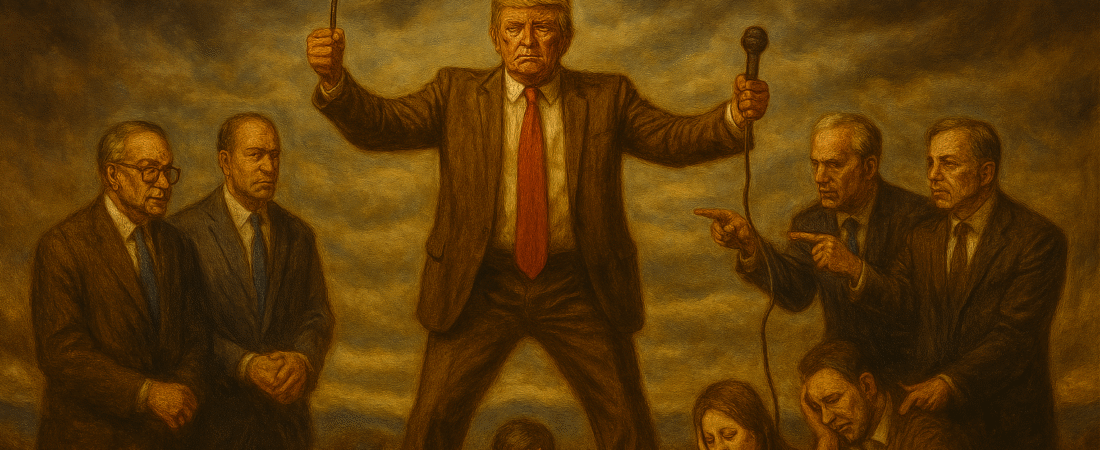
The Political Marriage: Dysfunction, Blame, and Collateral Damage
Imagine Congress as a couple whose marriage once bound broad constituencies together. The two chambers — and within them, competing factions — are partners who have grown incapable of compromise. They argue loudly in public, keep the lights off in the house when they feel slighted, and refuse to pay some of the household bills until the other side changes its mind. The result: a household where the kids (the American people) and the neighbors (small businesses, local governments) shoulder the consequences while the partners stage another public battle.
The President controls the affairs of Congress as a domineering, meddling mother-in-law who enters the clash with his own priorities, insisting the children accept a new rulebook and sometimes siding with one spouse in ways that inflame the other. These interventions can break deadlocks, but they also escalate grudges and make future compromises harder, because now the argument is not just between the partners but about who controls the household’s narrative and resources. The political theater of brinkmanship leaves lasting trust damage: partners who bargain in public hurt the household’s sense of security, neighbors who relied on steady cooperation begin to look elsewhere, and routines essential to daily life get disrupted.
What Lasts After the Lights Come Back On
When funding resumes, some losses are temporary and some are not. Payrolls are restored, and many suspended services restart; yet small firms that tightened lines of credit, laid off workers, or missed critical windows remain weakened. Economists note that while portions of lost GDP can be recovered, a share of the damage becomes permanent — lost sales, broken hiring plans, and frayed credit relationships do not rewind with an appropriations bill. Consumer sentiment and investor confidence can take weeks or months to heal as families and markets price in the risk of future shutdowns.
Closing Thought: Repairing the Household
If we want fewer shutdowns, and political skirmishes, the remedies are practical: clearer rules for funding, procedures that insulate essential programs and paychecks from political brinkmanship, and a culture in which compromise is treated as governance rather than defeat. But there is a moral element too. A household where partners weaponize children’s wellbeing to score points is not merely inefficient — it is a betrayal of stewardship. Rebuilding trust demands more than temporary fixes; it requires sustained commitments from leaders to place the country’s stability ahead of short-term advantage.
Once the government is back in business comes the harder work: rebuilding the economic momentum and community confidence that were strained by the shutdown and mending the political norms that made it possible in the first place. It is also overdue to open dialogue on the marriage of Congress, to restore diplomacy before the formation of irreconcilable differences.
Leave a Reply